Monday, 4 April 2011

The Effects of Stress on Animals

It's ironic that I'm about to talk to you about the effects of stress on animals because I currently look like this:
On a more serious note.. stress can be a very important measure of animal welfare. Stress can potentially show that there is a problem with the animal's welfare, particularly in captive environments. For example in a zoo with a monorail going over an enclosure, if an animal becomes stressed every time the monorail goes over it can indicate that the monorail is having a significant detrimental effect on their welfare.Stress is an important process as it allows the body to adapt to change. The stress response is triggered by a threat such as a decrease in temperature. This causes the hypothalamus in the brain to release corticotropin-releasing hormone (CRF) which travels to the anterior pituitary. CRF controls the release of adrenocorticotropic hormone which stimulates the adrenal cortex to secrete cortisol.

Cortisol is responsible for the body's response to stress. The cells which are not needed for what we call the "fight or flight" response are stimulated by cortisol so that they decrease their use of blood glucose and start using fats and proteins for energy instead. Processes such as immune system reactions are also turned off as they are not needed to cope with the stress. Metabolic rate is therefore increased and life-sustaining processes have more energy. Cortisol is a type of Corticosteroid which are used in stressful circumstances. Corticosteroids stimulate glucose production from fat (as mentioned above), break down the tissue protein, increase the sensitivity of the blood vessels to adrenaline (to allow fight or flight), increase the rate of urine formation, make muscles function for longer, affect brain excitability, increase gastric acid and pepsin secretion, act as an anti-inflammatory and suppress the immune system (as mentioned above). Once the stress response has served its purpose cortisol effects the cells of the brain which causes a decrease in the release of CRF in a negative feedback loop.

The effect of stress on the body has three different stages depending on the length of time the stress is present. The first stage is called the Alarm Stage. This is when the body first reacts to the stress and it's response is in a state of alarm. At this point adrenaline is produced so that the fight or flight response can be used. There is also some activation of the HPA axis, producing cortisol. If the stressor persists then the body begins to adapt to the change and this is called the Adaptation Stage. However, if the stressor persists for too long then the body enters the Exhaustion Stage and it's resources become depleted. This can cause long term damage to the individual with effects such as ulcers, depression, diabetes or cardiovascular problems and it must therefore be avoided at all costs.

The physiological processes which occur when an organism is stressed allow us to measure welfare effectively by taking measurements of cortisol or other corticosteroids. This allows for improvements to be made to a captive animals environment using enrichment. It can also be combined with behavioural welfare assessments to get a better result.

Animal Welfare

Animals have had a bad run of it haven't they? I'm deep in revision at the moment so you will probably get lots of posts from me while I'm doing my extra reading. Yesterday I was revising a lecture about Animal Welfare in general and Legislation. I decided to look up the history of animal welfare and some other bits and I thought they'd make an interesting blog post.

The first ideas on the moral status of animals probably came from the bible. Indeed, in Genesis (1:20-28) you can read about how Adam was given "dominion over the fish of the sea, and over the fowl of the air, and over the cattle, and over all the earth, and over every creeping thing that creepeth upon the earth". Other religions at this time did respect animals, an example of this was in buddhism where not only was there are deep respect for the animal kingdom but there was also a belief in reincarnation which was often not in human form. However, focussing on the Christian view of animals it is probably unsurprising that people such as the philosopher René Descartes (1596-1650) had the view that animals had no souls, mind or reason and therefore could not suffer pain. Nicolas Malebranche (1638-1715) had a similar view and was quoted as saying "animals eat without pleasure, cry without pain, grow without knowing it; they desire nothing, fear nothing, know nothing". Thankfully as time wore on people such as Jeremy Bentham and Jean-Jacques Rousseau argued for animal rights. In the 18th century Rousseau argued that animals were sentiant and Bentham argued that it was the ability to suffer, not to reason, which should influence the decision on whether animals had rights. In the 20th century the situation detiorated rapidly as the second world war came to an end and the industrialisation of farming meant that more animals were being killed for meat than ever before.

Now animal welfare is in the spotlight all the time and there are a huge variety of legislations and laws which can be read about on the DEFRA website. However the definition of welfare is still discussed and debated over. The most popular definitions are that welfare is "the state of an animal as it attempts to cope with its environment (Fraser & Broom, 1990) and "animal welfare is a state of physical and psychological harmony between the animal with itself and its surroundings". In spite of this the five freedoms from the UK Animal Welfare Council (FAWC) are widely accepted and list as follows:
  1. Freedom from thirst, hunger and malnutrition
  2. Freedom from discomfort
  3. Freedom from pain, injury and disease
  4. Freedom from fear and distress
  5. Freedom to express normal behaviour
 Extrinsic and intrinsic values of animals have a large effect on how people percieve animal welfare. Verhoog (1992) argues that scientists percieve animals as "analytic" beings rather than "naturalistic" like most people and that this may cloud their judgement when they are considering whether an animal's welfare is compromised. As well as this, it could be argued that scientists only take an interest in the welfare of an animal if they think its welfare should be respected. I know from experience that there is much less objection to the dissection of a locust than there is to that of a rat. Resistance to certain areas of animal research, such as genetic engineering, is often found to be for intrinsic reasons (such as it's not fair on the animal) rather than extrinsic reasons (such as risks of the experiment to the animal). Because of this, Rollin (1986) proposed the zoocentric bioethical theory which says that only higher animals with some form of consciousness are morally relevent and should be protected. Sentient animals have more intrinsic value to people as feelings of happiness are considered to be of value to the animals.

References
www.defra.gov.uk
Fraser, D. & Broom, D.B. 1990. Farm animal behaviour and welfare. CAB International, Wallingford, Oxon
Rollin, B.E. 1986. "The Frankenstein Thing": the moral impact of genetic engineering of animals, In: Verhoog, H. 2007. The tension between common sense and scientific perception of animals: recent developments in research on animal integrity. NJAS. 54(4) 361-373
Verhoog, H. 2007. The tension between common sense and scientific perception of animals: recent developments in research on animal integrity. NJAS. 54(4) 361-373

Wednesday, 9 March 2011

Amphibians and Reptiles are disappearing

The European Adder (from Wikipedia)


The Amphibian and Reptile Conservation (ARC) Trust have released a worrying report naming the species that are becoming rarer in the UK. The population of adders which are native to this country is declining rapidly and the populations of slow worms, common lizards, grass snakes,common toads, common frogs and great crested newts are also becoming more rare. Some of the endangered species already have high levels of protection but this does not apply to some of the species that are considered more common. The plight of the adder is one which must be looked at. While this species was once very common in the UK, it is now one of the rarest widespread reptiles and is in need of serious conservation attention.

The only good news given by the report is of the palmate newt which is actually increasing its range and becoming more common.This is thought to indicate changes in the quality of Britain's ponds as palmate newts prefer acidic pools which are now common from acid rain fall and agricultural run off which are major problems associated with pollution. However the main problem which is thought to be effecting the populations of amphibians and reptiles is habitat fragmentation.

Elephants Know About Cooperation


A new study has suggested that elephants know when they need help from another. The study, led by Dr Joshua Plotnik from the University of Cambridge, tested Asian Elephants (Elephas maximus) using a table with food on which was attached to two pieces of rope. The elephants quickly learned that pulling on the piece of rope without a helper caused the rope to fall on the floor and therefore the table was not pulled closer. This advanced grasp of the need to work together indicates that elephants belong to an "elite group of intelligent animals". Studies such as this one can be really helpful in developing conservation programs for endangered animals such as these. Read more on this story here.

Tuesday, 8 March 2011

Zombie Ants

Picture from The Guardian website
Fungi have been discovered in Brazilian jungles which infect ants, take over their bodies and ensure that they die in a place that is a perfect position for the fungus to grow and breed. This leaves "zombie" ant corpses, like the one above, with their mandibles attached to leaf veins which are the perfect place for spores to be released. Victims of this fungus (named Ophiocordyceps) have been found from up to 150 years ago but the mechanism involved has only just been discovered. Ants either find the spores on the floor of the forest or they fall on the ants from above. In seven days the fungus grows and releases chemicals which make the ant wander off and bite onto a leaf vein, usually in a place which is perfect for fungal growth. The ant dies moments after, leaving behind a vessel from which the fungus shoots is spores during the night.

Just another example of the marvellous ways in which fungi spread their spores (remember the glow in the dark fungi?).

Wednesday, 19 January 2011

Tagging May Be Harmful to Penguins

From BBC

There are many problems which must be overcome when carrying out studies on wild animals. For example when studying captive animals it is relatively easy to keep track of the animals. When carrying out studies on wild animals, especially over a long period of time, there are a few ways to make sure the same animals are used each time you sample. One of these methods involves putting a band around the flipper of a penguin and has been widely used up to now. It allows scientists to study specific individuals without having to catch them and cause them unneeded stress. The study of these animals is as important as ever, especially with the effects that climate change is having on their habitat. However, it has now been suggested that the use of these bands could actually be harmful to the animals.

When swimming, penguins use only their flippers to propel themselves forward and this is the reason that many scientists have questioned the use of these bands. Saraux and colleagues have now found that the use of these bands causes the survival rate in adult King Penguins to decrease significantly compared to the survival rate of non-banded individuals.As well as this, the breeding rate for those that survived was also significantly lowered. Finally, their study showed that banded penguins were more negatively effected by climate change than non-banded penguins as they arrived late to breed and therefore missed out on opportunities to create offspring. This study was a decade long and therefore longer than most other studies on this subject. Other methods of tagging are now going to have to be considered such as transponders under the skin of the individuals. As well as the effect these bands have on the survival rate of the animals, with the change in behaviour also considered the results of any past or future studies using these bands may be deemed insignificant and may have to be carried out again.

Reference
Saraux, C., Le Bohec, C., Durant, J.M., Viblanc, V.A., Gauthier-Clerc, M., Beaune, D., Park, Y., Yoccoz, N.G., Stenseth, N.C., Le Maho, Y., 2011. Reliability of flipper-banded penguins as indicators of climate change. Nature 469, 203-208

Thursday, 13 January 2011

Glowing Mushrooms and Fireflies

I've been neglecting you dear Zoology blog. I am very sorry and I am going to try and post on here at least once a week to keep on top of my extra reading. This evening I would like to talk to you about a very interesting subject I had a lecture on this week, bioluminescence. Many of us will have seen examples of bioluminescence (without knowing the fancy word for it) in fireflies and some people may also have seen glow worms. The majority of bioluminescence however is found in the oceans.

animals.nationalgeographic.com

As you would expect, it is very hard to see when you live in a deep sea habitat. The photo above is a Anglerfish which lives in very deep regions of the ocean and looks very much like a scary alien from a sci-fi movie! As you can see, the Anglerfish has a lure which has a light on the end. If you have ever seen Finding Nemo you will know that it uses this lure to attract smaller fish for it to eat. Dragonfish have a similar lure which goes underneath them rather than over their mouth. Dragonfish also have a light next to their eye which is a wavelength that only they can see. This is a pretty nifty way of being able to see both predators and prey without them seeing you.

tech.ca.msn.com

Bioluminescence is also helpful for marine organisms avoiding predators. The Hawaiian Bobtail Squid uses a bacterium (Vibrio fischeri) to create light which it reflects from its body in the same direction as the moonlight and therefore obscures its silhouette in the water and makes it difficult for predators to see them. The image above is the deep sea octopus (Stauroteuthis syrtensis) which is one of the very few bioluminescent octopuses. Strangely, it is the suckers on this octopus which light up and the function of this is not yet known but could be to either attract prey or for communication. The bioluminescence shown in ocean species is generally either blue or green as these are the colours that travel the furthest. In terrestrial organisms the colours can vary greatly.

animals.nationalgeographic.com

As I mentioned earlier, fireflies are a well known example of bioluminescence and are one of the few terrestrial examples. Since fireflies are usually seen as little glowing dots I thought I would give you a close up picture of one. Different species of firefly use different colours of light depending on the time of day they use their light and the ability of that particular species to see different colours. Many species emit red light but we only see yellow or green light due to our eyes. These organisms use their light to attract mates so they can reproduce, which is very different from the marine organisms we have already talked about.

Wikipedia
Finally I would like to talk to you about bioluminescent mushrooms. That's right, glowing mushrooms. The picture above shows a tropical fungus which is often found on decaying matter such as wood or leaves. When conditions, such as temperature and water content of the soil are right, these fungi glow. At night insects are attracted to the fungi and carry away spores which are then dropped somewhere nearby. This allows maximum growth of the spores due to the good conditions.

Bioluminescence is a very interesting subject that is still being researched. It is unknown why many organisms spend so much energy on producing light and studies are currently going on to help us discover more about this fascinating subject. The animals I have mentioned about are only a few of the many examples of this phenomenon and many are still being discovered.

References:
  •  Deheyn, D.D., Latz, M.I., 2007, Bioluminescence characteristics of a tropical terrestrial fungus (Basidiomycetes), Luminescence, Voll 22, pp 462-467
  • Dehingia, N., Baruah, D., Siam, C., Gohain Barua, A., Baruah, G.D., 2010, Purkinje effect and bioluminescence of fireflies, Current Science, Vol 99 (10), pp 1425-1429
  • Johnsen, S., Balser, E.J., Widder, E.A., 1998, Light emitting suckers in an octopus, Nature, Vol 398, p113
  • Nyholm, S.V., McFall-Ngai, M.J., 2004, The winnowing: establishing the squid-vibrio symbosis, Nature, Vol 2, pp 632-643

Wednesday, 27 October 2010

How Do Springbok Keep Cool?

www.ultimate-africa.com

Springbok (Antidorcas marsupialus) live in South Africa which, obviously, can get very hot during the day. Many animals that live in Africa tend to try and stay in the shade during the day to keep cool but there are also those that store heat in their body during the day and then let their body temperature decrease rapidly during the night so that the next day they can do the same again. This technique is called adaptive heterothermy and has been seen in often in captive animals. Fuller et al (2005) carried out a study to see whether this technique was also found in wild animals and decided to investigate a free ranging herd of Springbok.

For this study some very impressive technology was used to save time and also to make the results more accurate. Small data recorders where implanted inside each animal and these measured the body temperature of the animals every 30 minutes for a year. If this technology had not been used then the Springbok would have had to have been captured every 30 minutes, every day for a year. Not only would this be very time consuming, it would also affect the results of the study because the animals would likely be stressed about being caught all the time. While the animals were doing their own thing for a year, the team measured the temperature of the air, the wind speed and the humidity so that at the end of the year the body temperature could be compared with the weather.

If the Springbok used the technique described above then the body temperature would be expected to change often with very wide swings. They actually found that the opposite happened. No matter what the weather was like, the body temperature of the animals hardly changed. This technique is called homeothermy and it was a very surprising find. Even stressful events like giving birth did not affect the body temperature a great amount.

This study highlighted a very important point to consider when carrying out experiments on body temperature. When animals are roaming free in their natural environment they often use behavioural mechanisms to change body temperature instead of using physiological mechanisms such as adaptive heterothermy. Behavioural mechanisms like this include huddling together when it is cold or finding a shady area when it is too warm. Fuller and team made a mistake in this study because they did not watch the behaviour of the animals, they only took physiological measurements. Hopefully further studies will be carried out that will learn from this mistake!

References
Fuller, A., Kamerman, P. R., Maloney, S. K., Matthee, A., Mitchell, G. and Mitchell, D. (2005). A year in the thermal life of a free-ranging herd of springbok Antidorcas marsupialis. J. Exp. Biol. 208, 2855-2864.

Tuesday, 5 October 2010

A Decade Long Marine Census Comes To An End

Yeti Crab - Census of Marine Life

The Census of Marine Life which started in 2000 has finally been completed. It is estimated that during the census 20,000 new species have been discovered, bringing the number of known species to nearly 250,000. The decade long project cost £413m and aimed to find out what lived, lives and will live in the oceans. It involved more than 540 expeditions with over 2,700 researchers and used many new types of technology. Fish were tagged and seals were fitted with monitors to record when they dived. Acoustic systems were used to measure fish populations.

Dr Ian Poiner, the chairman of the project’s scientific steering committee, told the BBC “All surface life depends on life inside and beneath the oceans”. This is literally true because we know that life evolved from the oceans and the very first life forms were aquatic organisms. Back then the atmosphere did not have everything they needed to survive but the water did. It was a while before the air contained the nutrients that were needed but eventually life began to evolve on earth. It is thought that there could still be many undiscovered species in the oceans and there could be at least a million of them in total.

Many wonderful species have been discovered during this census, including a Jurassic Shrimp that has thought to have been extinct for at least 50 million years and a crab which has been named the Yeti Crab (see the picture at the top of this post). However, it wasn’t just large organisms that Dr Poiner’s project looked for. The census included trying to tell tiny microbes apart using genetic sequencing. If you thought that a million organisms was a lot then you will be surprised at how many different types of microbes are thought to be in the water – one billion. Hopefully the Census of Marine Life will serve as a base for us to build on to try and preserve marine life.

Source - MSN News

Wednesday, 29 September 2010

A New Species of Giant Elephant Shrew?


An elephant shrew in an undated photo released September 21, 2010.
Credit: REUTERS/Zoological Society of London/ Handout


Researchers in a remote Kenyan forest, the Boni-Dodori forest, think they may have discovered a new species of Giant Elephant Shrew (Macroscelidea). Further genetic analysis will be carried out by the Zoological Society of London and the Kenya Wildlife Services (KWS) to determine whether this is actually a new species or whether it is a new variety of a current species.

Interestingly, the Giant Elephant Shrew is more closely related to elephants than shrews. Unlike many small mammals, these Shrews are only active during the day. They use their long snout to search under leaf litter where their food source, invertebrates, can be found and eaten with their extremely long tongue. It is the long snout that originally gave the Elephant Shrew their name.

Scientists launch many expeditions a year to research biodiversity around the world and this is especially needed now that forests take up a much smaller area of the world than they did 40 years ago. This is particularly dangerous as loss of habitats can cause animals to become endangered and even extinct, especially if they are not as widespread as some animals. The Giant Elephant Shrew are among the list of endangered animals and the discovery of a new species is a very significant discovery. Elephant Shrews tend to be more adapted to areas where water and food is available all year round, such as coastal forests, and destruction of the forests can be drastically dangerous for the survival of these species.

References:
The African Wildlife Foundation (AWF)

Thanks to fellow zoologist Nicola for pointing this story out to me!

Sunday, 26 September 2010

Why Do Lions Roar While Cats Meow?


If you don’t already know (and why would you?), cats are my favourite animals. I love small cats and large and my favourite cat is the Tiger. I was therefore very interested when I saw this article on the BBC website. In it, Ella Davies explains why bigger cats, like Lions and Tigers, roar and Wildcats meow. I have wondered this for a while and find it very interesting so I thought I would tell you all about it.

In a recent study, two scientists from the Alexander Koenig Zoological Research museum in Germany analysed the calls of 27 different species of cat and investigated whether they were affected by the habitat that the cat lived in and the size of the cat. While previous research found that it was the cat’s size that influenced the pitch of its calls, this study showed that cats living in open areas (e.g. lions, servals and cheetahs) had deeper calls than those living in dense habitats such as forests (e.g. marbled cats, wildcats and clouded leopards).

Previous research has shown that high pitch calls can be disrupted by dense vegetation and low pit calls are disrupted by air turbulence in more open spaces. Other scientists believe that the reason is actually because big cats can produce sounds at a lower frequency and this is why lions roar while cats meow. However, this study investigated this theory and found that body weight had no effect on how deep the call was.

I have found the published works of this study and plan to read through it for some more information. I will get back to you! You can find the article at the BBC here.

Saturday, 25 September 2010

Kin Selection and Evolutionary Stable Strategies in Vampire Bats


This morning I have been reading about evolutionary stable strategies and one of the examples given in this week’s lecture was reciprocal food sharing in Vampire Bats so I have done some reading on it. I think it is really interesting how these bats behave so I’m going to tell you a bit about it from what I have learnt! First we need a definition of what an evolutionary stable strategy actually is. If most members of a population adopt the same strategy and this cannot be bettered by any other strategy then it can be defined as an evolutionary stable strategy (or an ESS). These are frequency dependent and this is because the successfulness of the strategy depends on what the organisms around you are doing. It can also depend on whether there are “cheats” around as these can take advantage of the ESS and lead to its downfall.

The research I read this morning was done by Gerald S. Wilkinson in 1984 and it is an example of an evolutionary stable strategy in the Vampire Bat (Desmodus rotundus). Vampire bats who do not manage to get a blood meal during the night often beg blood from successful individuals in the roost during the day. The successful individual may regurgitate some blood for the other bat to take in and therefore increase its chance of survival. Wilkinson investigated how this behaviour was an evolutionary stable strategy and came up with three conditions that need to be fulfilled in order for it to be considered an ESS. These were:
  1. There must be enough repeated regurgitations between pairs of bats so that they each get a chance to regurgitate and receive blood
  2. The benefit of receiving the blood must be greater than the cost of donating
  3. Donors need to be able to recognise and not feed previous bats that have not reciprocated


When doing a census of the roost, it was found that the main social unit is the female group. This is because males tend to leave their natal group when they become one year old. Female bats tend to stay in their maternal groups and this means that female groups are usually made up of close relatives with only a few exceptions.  Most of the regurgitation of blood occurs between a mother and her offspring and any others tend to be between animals that are frequent roost mates. Blood is donated preferentially to individuals that are likely to die in the next 24 hours if they are not fed. This shows that the giving of blood is to increase the chances of a survival of a related bat. If the bat survives to adulthood it is more likely to reproduce and pass on the family genes. This is called Kin Selection and is quite common in the animal kingdom.

References

Wilkinson, G.S., 1984, Reciprocal food sharing in the vampire bat, Nature, Vol 308, pp 181-185

Monday, 20 September 2010

A Sad Fate For This Organism But It May Give Hope For Others

Image from BBC News here.

This Saola (Pseudoryx nghetinhensis) was captured by villagers in Laos in the middle of August this year. They nicknamed it the “Asian unicorn” even though it has two horns instead of one. These animals are extremely rare and have never before been seen by anyone in the wild or in captivity. The only information we have about this mysterious animal was gotten from photographs taken by local villagers.  It is believed to live in the Annamite Mountains of Laos and Vietnam and this is where this adult male was found. It was brought back to the village where villagers took photos of it and notified the authorities. The Bolikhamxay Provincial Agriculture and Forestry Office arrived in the village too late and the Saola unfortunately died as it was weak from its capture. A spokesperson however insists that although the death of the Saola is unfortunate, at least it confirms where the animal still lives so that conservation efforts can be strengthened. The carcass of this animal was taken back to the labs for further analysis. Once more information has been gathered on the biology of this species, it will be easier to conserve it and maybe even take some into captivity where breeding programmes can be implemented.

The Saola was delared a new species in 1992 after it was found in Vietnam and its DNA was analysed. Although it looks very much like an antelope, it is thought to be more closely related to cattle. The IUCN red list of threatened species lists the Saola as critically endangered and it is thought that the number surviving may only be 24-100. The last time any of these animals were seen was in 1999 when automatic camera traps photographed one in Laos.  The Laos authorities have now urged other Laotian villagers not to capture any Saola due to the rareness of the species. Awareness of the species needs to be raised in the local areas to prevent any more deaths from occurring although it is still unclear why villagers captured this specimen in the first place.


Friday, 17 September 2010

Bear Is Seen Practising Yoga

Source - Guardian


A bear at Ahtari Zoo in Finland has been caught on camera doing a stretching routine that looks very much like yoga! Santra is a female brown bear (Ursus arctos) and was caught on camera performing a 15 minute long stretching routine by a Slovenian tourist.

She started off with both legs in her hands in a V position. She then held up her left leg only and held it for a bit and then her right leg only and left it for a bit. She then repeated the routine. Throughout the 15 minutes Santra looked focussed and calm, exactly like a human does when they’re practicing yoga. A yoga teacher from Bristol told the BBC that the bear was doing expert postures and it was obvious that she was an advanced practitioner. He thought that she might have started doing yoga to keep herself sane.

I’m not sure about yoga, but I think that this routine could be a sign that Santra is not happy in her environment. If she does it often then it could be a stereotypical behaviour. These are behaviours that are repeatedly performed and show that the welfare of the animal may be below standard. If it is a one of then it might just be a coincidence.

Read the story here and see more pictures of the routine here.

Thursday, 16 September 2010

The National Trust Hunt For a New Snail Species in Britain


The National Trust has begun a search for a snail which originally comes from the Mediterranean since two colonies have been found in the UK. It is thought that the snail hitched a ride to this country on imported Italian and Greek stones over 100 years ago. A nationwide hunt is now being conducted to find where else this snail lives. The snail has no common name but its scientific name is Papillifera bidens. It is around 13mm long and has a pink/grey spindle shaped shell. There is now dispute between the two sites where the snail was found over whether it should be named the Cliveden snail or the Brownsea snail.

P.bidens is believed to have come to Brownsea Island on rock which was imported from Greece in the 1880’s. It is thought that they arrived at Cliveden later, in 1896, when brick and marble was imported from Rome. Since they arrived, the snails have not ventured far from each site and the two colonies have only just been discovered. They were discovered by volunteers that were cleaning statues for the organisation in 2008 on the Cliveden estate in Buckinghamshire. The National Trust is now searching all of its properties to see if the snails are living anywhere else in Britain, the theory being that the Victorians and Edwardians imported many statues, rock and brickwork from the Mediterranean and so this snail could have hitched a ride to elsewhere in the country. The National Trust for Scotland and English Heritage are also helping with the search.

The public have also been asked to keep an eye out for individuals of this species and upload photographs to this Flickr site where experts will verify whether the snails belong to this species. They have said that it is quite possible that the snail has spread to elsewhere in the UK due to items from gardens of grand houses being sold and put in household gardens. So far only one photo has been uploaded to the Flickr page and that is the one put there by the National Trust and can be seen at the top of this post!

(sources - BBC News and The Guardian)

Monday, 13 September 2010

The New Species of Miniature Frog (Microhyla nepenthicola)

As promised, I have been researching the species that I posted about yesterday morning. Today I found some more information on the Miniature Frog (Microhyla nepenthicola) which was discovered in Borneo in August of this year. The article I found can be found here.

This species of frog was found inside a species of pitcher plant named Nepenthes ampullaria. These plants live in areas which have nutrient poor, acidic soils and this makes it difficult for them to take in the nutrients they need. They have solved this problem by developing cavities that trap insects and kill them with a liquid. The frog has taken advantage of these cavities. It deposits its eggs on the side of the pitcher so that when they hatch, the tadpoles can enter the liquid in the cavities and grow.

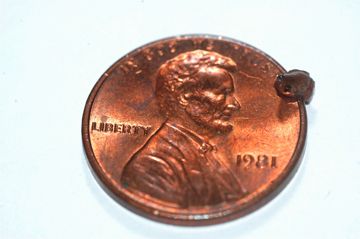
M. nepenthicola is part of an amphibian family called microhylid. The family consists of frogs that are under 15mm long and according to Conservation International (CI), this species of frog is the smallest that has been discovered in this family. Adult males measure from 10.6 to 12.8mm long. Their amazing size can be seen on the picture below which was taken by Indraneil Das/ Institute of Biodiversity and Environmental Conservation and shows the frog on the side of a penny. It was thought that their tiny size could be the reason why this species has not been discovered until now. However, specimens that are the same species as this frog have been found in museum collections that are over 100 years old. They were not recognised as a new species and it was thought that they were merely juvenile frogs from other microhylid species.


Scientists discovered the frogs by tracking their call. It has been discovered that individuals of M. nepenthicola start singing at dusk with harsh notes. They sing for a few minutes at a time with intervals of quietness. The singing starts when the males gather within and around the pitcher plants and peaks in the early hours of the evening.

This discovery is part of the campaign that the CI and IUCN’s Amphibians Specialist Group are running. The campaign aims to rediscover many species of amphibians that are considered “potentially extinct”. According to the IUCN, these “lost amphibians” may still be living in remote parts of the world. The conservation status of amphibians will likely be highlighted with this campaign. Numbers of amphibians are currently declining world-wide due to use of pesticides, habitat destruction and other man-made problems. At least one third of all amphibians are currently classed as “threatened”. If you are interested, the campaign can be followed here.

Sunday, 12 September 2010

New Species According to MSN News

This morning I noticed an article on MSN News (news.uk.msn.com) about several new species that have been discovered. Most of the species were discovered in deep sea expeditions off Canada's Atlantic Coast and the Sangihe Talaud Region off Indonesia. I'm going to tell you about the species from the information that MSN gives but I will do some more research on these species at a later date as they intrigue me! If you click on the bold names of the species it will take you to the MSN page with them on. These photos are not mine, they are from the MSN website.


This image was provided to MSN by the National Oceanic and Atmospheric Administration. Chimaeras share an evolutionary history with sharks and only branched into separate species 400 million years ago. They have mechanoreceptors that detect pressure of the water around them and they use these to navigate in the ocean. These can be seen in the photo, they are the lines on the organism. Ampullae de lorenzini near the mouth can detect electrical fields generated by other organisms. These will also help in navigation and maybe in avoiding predators and detecting prey.

This Purple Octopus has not been identified according to MSN. It was one of 11 potentially new species that were found in the deep sea expedition off Canada's coast in July of this year. 


This odd looking crab was discovered by a Taiwanese professor named Professor He Pinghe from the National Taiwan Ocean University. He named it the New Pedal Crab (Xin Hua Ban Xie) but the nickname "Strawberry Crab" stuck after people realised it looked just like a strawberry.


A new species of miniature frog (Microhyla nepenthicola) was discovered in August of this year and is about the size of a pea. It lives inside and around Pitcher Plants in forests on the island of Borneo. It is part of the Microhylid family which consists of miniature frogs that are under 15mm in size.


 This Sea Star is thought to be a new species and was found off the coast of Newfoundland in Canada during a 20-day research trip off Canada's Atlantic coast.


This odd looking creature was photographed by the National Oceanic and Atmospheric Administration near Indonesia. It is a flower like sponge which is thought to be carnivorous.


This species of Octopus was also found in the expedition off the coast of Newfoundland in Canada and has yet to be identified. 


This photograph of a Sea Lily was taken by the National Oceanic and Atmospheric Administration. The Lily was found 516 metres below the ocean surface in a region off Indonesia


This photo of an unidentified Octopus was taken by the National Oceanic and Atmospheric Administration. This Octopus was also found off the coast of Indonesia.

Thursday, 9 September 2010

Welcome!

Hello, welcome to my Zoology blog! I hope to bring you interesting information and research to do with Zoology. This involves physiology, animal behaviour and ecology as well as other things so stick around!

Billiesue